
The wrong room has a cost.
Celebration can be forced where grief is present. Strategy can be attempted where trust is strained. Intimacy can be requested before consent is ready. We begin by discerning the room before designing the day.
Terroir Trails designs private Wine Country Councils for the relationships that shape a life — friendships, families, vows, founder teams, leadership rooms, and legacies.
Most gatherings begin with logistics: the venue, the meal, the agenda, the guest list. We begin one layer earlier — with what the moment actually needs. The right Council is not picked from a menu. It is designed around the people in the room.
Presence · Story · LegacyThere are formats for almost everything except the truth beneath the gathering.
A reunion can gather old friends without helping the friendship understand what it has carried. A wedding weekend can celebrate a promise without giving the promise a private room of its own. A leadership offsite can produce slides while the real conversation remains beneath the table. Terroir Trails exists for the moments when the ordinary format is too thin for what is actually present.
We are more connected, more scheduled, and more measured than ever — yet the rooms where people can speak with dignity, remember clearly, repair without spectacle, and decide with trust have become scarce. Terroir Trails is built for that scarcity.
Celebration can be forced where grief is present. Strategy can be attempted where trust is strained. Intimacy can be requested before consent is ready. We begin by discerning the room before designing the day.
Friendships, families, founders, vows, boards, and leadership teams carry history. Without form, the meaning often remains unnamed — or disappears into another dinner, retreat, or meeting.
Wine country is the setting. The real offering is a prepared room: confidential reflections from every guest, a Director who reads them and designs the day around what they show, and artifacts that keep working after the day is gone.
You may already know the threshold. Or you may only know that something important is present. Either way, the first act is not booking a day. It is understanding the room.
You already know the moment you are crossing — a covenant, an honoring, a friendship long carried, a leadership threshold. Begin with the format, and let the Director prepare the room around it. Even here, a brief Field Calibration comes first — so the day meets the room as it truly is.
Explore the CouncilsYou know something important is here, but not yet what to call it. Field Discovery is a confidential first step: short written reflections and a conversation with the Director, who then recommends the right Council — or the right sequence, or an honest not yet. Not a scorecard. A careful read of what your group actually needs.
Begin Field DiscoveryA Council begins when an ordinary format is no longer enough. Not because the moment is dramatic, but because something important is asking to be seen before it disappears into logistics.
A friendship has carried more than anyone has named.
A team is circling the real conversation but ordinary meetings cannot hold it.
A family wants to honor someone while they are still here to receive it.
A couple wants to enter covenant with witness, not spectacle.
A principal or founder needs the next season to be spoken before it hardens into drift.
A group has reached the edge of what another dinner, retreat, or offsite can carry.
What have we carried together?
What has never been thanked?
What must be repaired before we move forward?
What role has each person quietly held?
What should not be forced?
What is this relationship asking to become now?
Terroir Trails creates the room where those questions can be held with beauty, privacy, and care — so the day leaves behind language, grace, and a way to return.
Most premium experiences perfect the visible surface: the table, the wine, the view. We begin earlier and go deeper — into the private preparation that allows the room itself to become coherent.
Before the Council, each guest completes a confidential reflection. The host never sees individual answers. The Director reads the field and prepares the day with unusual precision.
A Council is guided without being forced. The Director protects pacing, silence, truth, and consent so the conversation can deepen without becoming spectacle.
The day leaves behind Relational Portraits, Field Readings, Circle Care Maps, covenants, ledgers, blessings, and heirloom objects — not as souvenirs, but as structures for remembrance, repair, and return.
A Terroir Trails Council does not begin when guests arrive. It begins when the field is read.
Before the day, each principal completes a private reflection. The system organizes the signals into a Director-held Field Reading: what is ready to be named, what must not be forced, what kind of silence the room needs, where the true threshold lives, and what artifact should remain.
The estate is the setting. The Council is the form. The prepared room is the offering.
Under the surface of the ceremony is a confidential reflection process. Every guest's answers become the Director's private preparation: the day's pacing and seating, what must not be pushed, the reading each guest will receive, and the artifacts the day leaves behind. Precision, without ever becoming clinical.
The reflection listens for how a person arrives in relationship: presence, purpose, repair style, relational role, and the format-specific Council Lens — friendship, leadership, union, honor, or family legacy.
The structured responses and notes become the Director’s private preparation layer: pacing, seating, silences, invitations, no-surprise boundaries, relational artifacts, and which inheritance object the room should leave behind.
It does not diagnose, rank, expose, or reduce a person to a type. The host never sees individual answers. The system offers synthesis; the Director authors, edits, and seals with human judgment.
We do not measure people to categorize them. We listen for relational patterns so the room can meet them with precision.
New categories become clear when their boundaries are visible.
A private Council — designed, held, witnessed, and preserved. A prepared relational field where a friendship, family, vow, founder team, or leadership room can tell the truth at the depth it has actually earned.
The luxury is not simply access to beautiful estates. The luxury is being prepared for, read with care, and met by a room that feels designed for exactly this circle, on exactly this day.
Each guest receives a confidential private reflection — structured, notes-rich, and privately held — that helps the Director understand how they arrive in relationship and what the day must protect.
The Director composes a private map of the room: pacing, sensitivities, likely openings, what should not be forced, and where the day may naturally deepen.
Each principal receives a private reading, written by the Director from their own reflection — how they arrive, what has protected them, and what may be ready to change. Sealed, and theirs alone.
What happened is preserved: photographs, audio, private writings, commitments, future-date letters, and a physical artifact designed for the relationship to carry forward.
The unifying word is relationship. The question changes by room: what has this relationship carried, or what must this relationship now decide?
For chosen kin, families, vows, living tributes, and the relationships that deserve a ritual before time changes the room.
Explore Personal Councils → LFounders · Principals · Boards · TeamsFor leadership rooms where strategy, decision rights, founder dynamics, and operating rhythm need to be held in one truthful field.
Explore Leadership Councils →Personal rooms and leadership rooms share the same hidden discipline — the confidential reflection process — but they should not be sold in the same emotional register.
Friendship, family, vows, elderhood, and chosen kinship. These Councils preserve what relationships have carried before time, distance, or mortality changes the room.
Founders, boards, principals, and leadership teams. These Councils create a room where strategic truth, relational friction, decision rights, and operating cadence can be clarified together.
The brand remains one house. The pathways are separated because the buyer state is different: personal clients ask whether a relationship deserves a ritual; leadership clients ask whether the room is serious enough to change what happens next.
Some friendships deserve more than another dinner, another trip, another set of photographs. They deserve a record.
The Inner Circle Council helps a friendship become conscious of itself before time scatters, hardens, or erases what it has carried.
The movements change by format, but the arc is constant: crossing the threshold, lowering the noise, naming what matters, walking with it privately, and returning with something that can be carried.
The Director opens the room. Sabrage or first pour marks the boundary. The group leaves ordinary time and enters the discipline of attention.
A long table, unhurried pacing, and carefully held prompts allow the circle to arrive before anything important is asked of it.
The conversation the room came for begins to emerge. Sealed Readings, structured rounds, or strategic deep work appear here, depending on the Council format.
Guests walk, read, write, or sit privately. The day gives each person room to receive what has been named before returning to the table.
Blessings, commitments, covenants, toasts, or artifacts are sealed. The day ends, but the Ledger and inheritance objects begin their work.
The Council may invite depth, but it never ambushes vulnerability. Consent is part of the architecture.
A gathering ends. What it made does not have to. For families who choose it, the house keeps what the evening set down — a sealed reading, a sentence in an envelope, a bottle laid quietly away — held against a day named in advance: a wedding, a succession, a threshold not yet crossed.
The letter sealed at one generation's table is opened at the next. We keep the table set between them.
This is the promise our name is built to keep.
The take-home is not decorative. It is relational: a mirror, a map, a letter, a keepsake, and a way for the relationship to continue speaking after the day is gone.
What it isA private, Director-authored mirror of how one arrives, carries, repairs, and gives.Why it mattersThe guest leaves not with a score, but with language for how they are known and how they may return.
What it isA shared reading of what the relationship, family, friendship, or team has carried — and what the room may now require.Why it mattersThe group leaves with a field map, not a vague memory of a beautiful day.
What it isThe confidential synthesis used to protect, pace, compose, and recommend the room.Why it mattersPrecision remains beneath the surface; poetry and care remain above it.
What it isAn artifact placed gently between people so the relationship can speak about itself.Why it mattersThe report is not the final word. The relationship is.
What it isA warm private reflection for those who have been known over time — memory, teasing, tenderness, rupture, and grace included.Why it mattersFriends become interpreters, not subjects.
What it isA record of who the circle calls on for courage, repair, memory, truth, lightness, and future imagination.Why it mattersArchetypes become roles of care, not personality cages.
What it isA post-Council leadership artifact naming decisions, load, responsibilities, unresolved questions, and operating commitments.Why it mattersThe room does not dissolve into inspiration. It leaves behind accountability.
What it isPrinted photographs, letters, estate marks, tasting notes, sealed envelopes, and future-date prompts.Why it mattersMemory becomes touchable — and return becomes possible.
The artifact opens the conversation. The relationship completes it.
A Relational Portrait, Friendship Mirror, Field Reading, or Care Map is not the final word. It is the third object placed gently in the room so the relationship can test, bless, correct, deepen, or release what it sees.
These are early visual mockups — not final production art — showing how the Council becomes something guests can hold, revisit, and inherit.
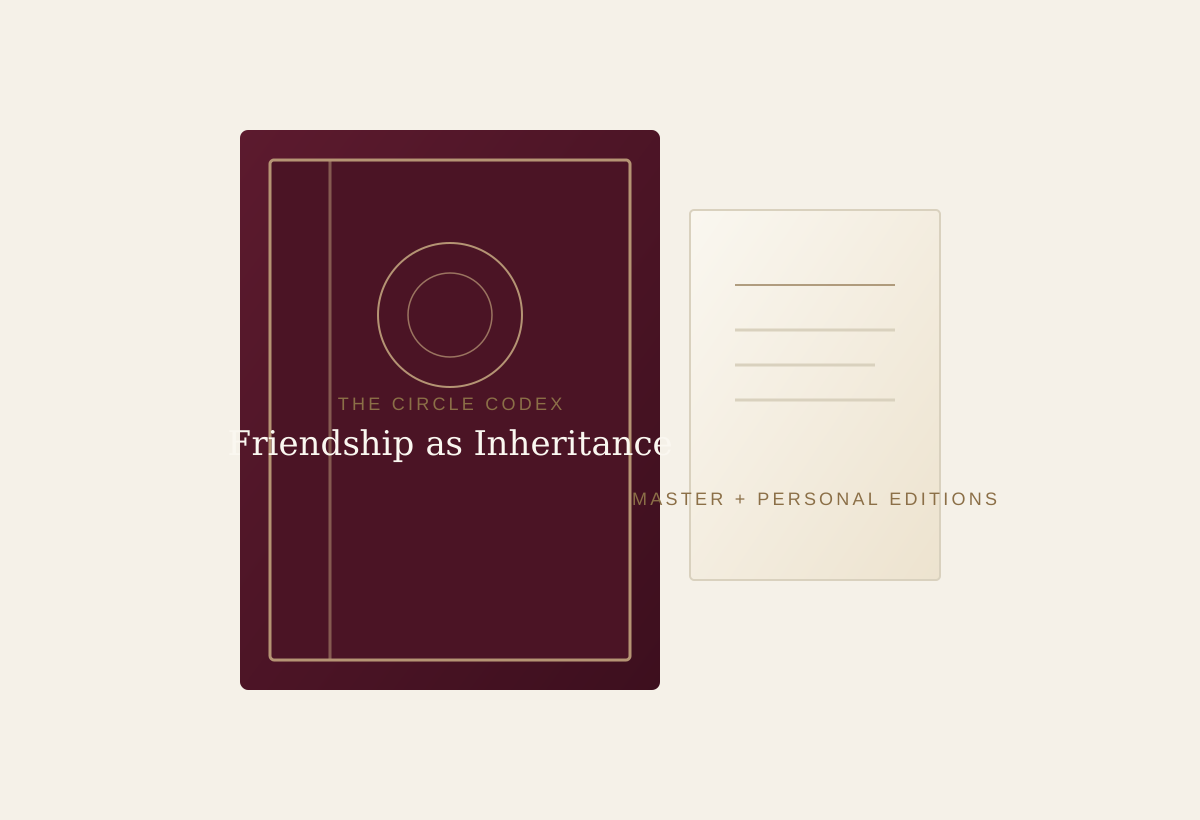
A master record of the friendship, held by the circle: witnessings, blessings, photographs, anti-drift covenant, and continuance practices.

A Reflection-derived, Director-authored reflection named for one person alone — printed, sealed, and preserved only by consent.
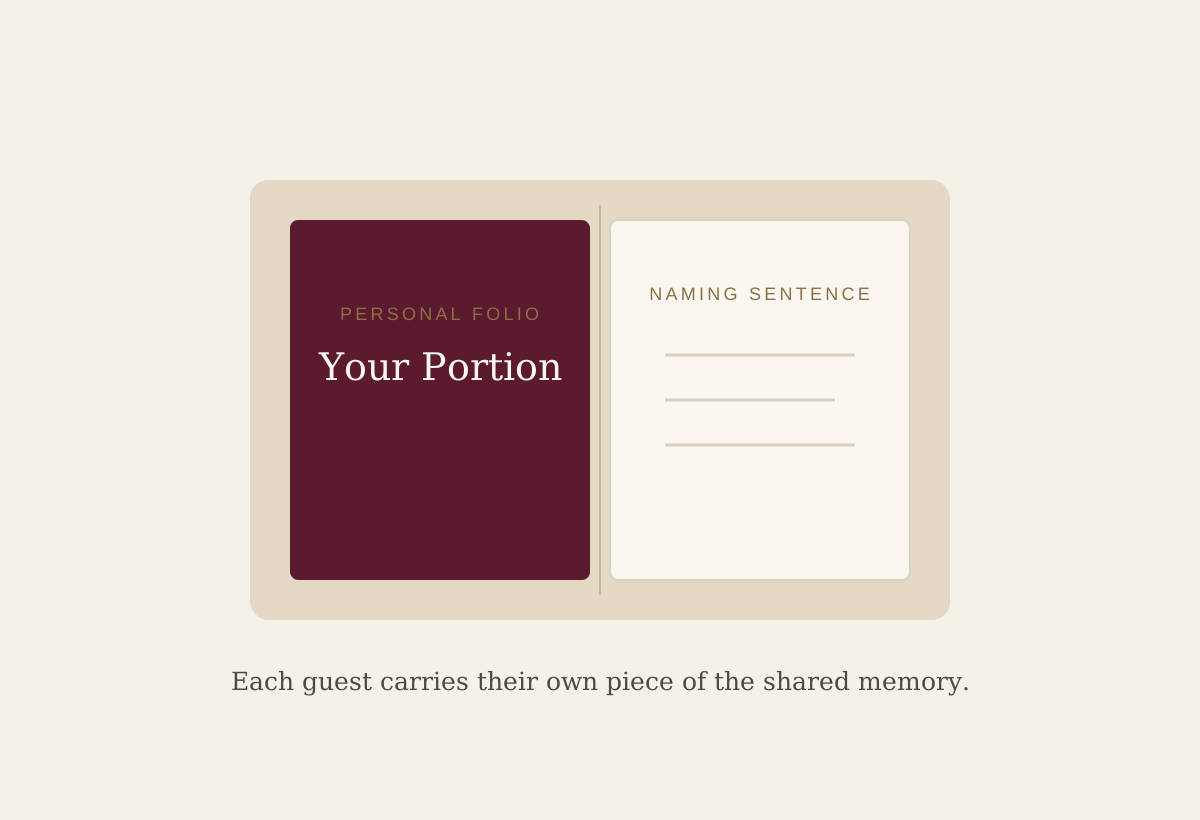
The distributed-memory layer: each guest carries their own portion of the inheritance — blessings, images, Naming Sentence, and private pages.
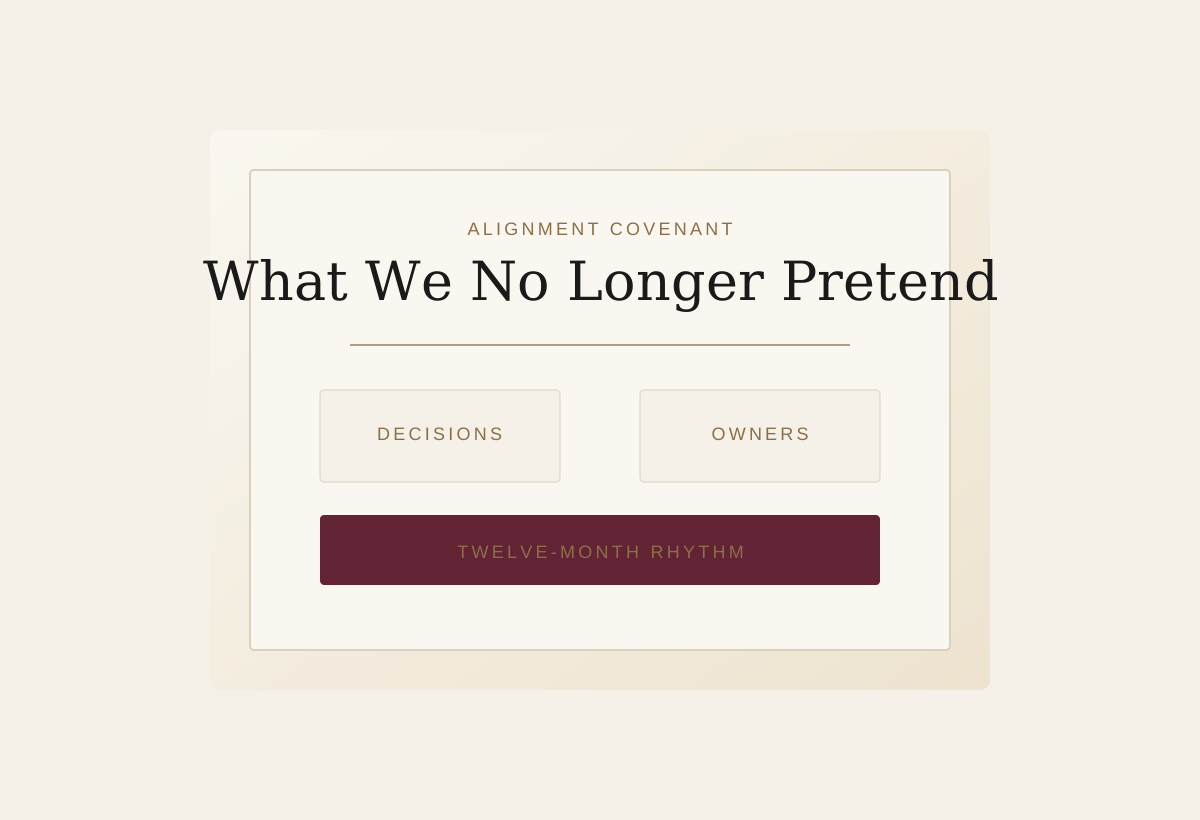
For leadership Councils: what was clarified, what will no longer be pretended, who owns what, and what rhythm carries the decision forward.
Each Council includes the confidential reflection process, Director synthesis, estate sequencing, Council facilitation, documentary capture, and post-Council artifact design. Pricing scales by guest count, format complexity, artifact suite, and whether practitioner holding is added.
Founding-season pricing remains intentionally simple while the first fifty Councils are curated by direct inquiry.
For friendship, family, honor, union, and chosen-kin thresholds.
2–4 guests
Best for proposals, vow renewals, and small inner-family thresholds.
6–8 guests
Best for Inner Circle, Council of Honor, and chosen-family witnessing.
10–12 guests
Best for larger family, friendship, or milestone Councils with expanded artifacts.
Circle Codex, Linen Heirloom Box, Sealed Vintage, personal folios, and facilitator attendance are quoted as additions when appropriate.
For founders, principals, boards, and leadership teams at strategic inflection points.
Includes private principal reflections, Director Field Map, Council Dossier, facilitated strategy Council, and an Alignment Covenant.
Composed around the team's actual threshold: repair, decision, creative breakthrough, or founder integration. Practitioner, mediator, or governance advisor attendance may be added where appropriate.
The work begins only when the room is appropriate. We do not stage ambushes, force vulnerability, arbitrate disputes, or use beauty to disguise pressure.
A team may ask for alignment before recovery. A family may ask for celebration before grief has been honored. A friendship may ask for nostalgia when repair is quietly present. Field Discovery helps the Director name not only what is needed, but what should not be forced yet.
Each estate is selected not only for beauty, but for what the movement requires: privacy, acoustic softness, walking ground, thresholds of light, and rooms where people can hear themselves think.
The wine is not the point. It is the hourglass, the marker, the way time enters the body without urgency.
The Council requires discretion, absence of interruption, and a setting where the group is not performing for strangers.
Terrace, cellar, table, and vines each ask something different of the room. The itinerary is emotional architecture.
We look for places where stillness feels natural, not awkward — where silence can do part of the work.
Years later, the smell of oak, the angle of light, or the sound of gravel should return the Council to the body.
People do not only need more experiences. They need forms capable of holding meaning before it disappears into logistics, photographs, and the next obligation.
Terroir Trails begins from a simple conviction: some relationships become part of the architecture of a life, yet are never given an architecture of their own. Friendship, chosen family, founder partnership, sibling loyalty, elderhood, repair, recommitment — these shape us profoundly and often pass without a formal room.
We make the room. We protect the threshold. We compose the day so presence can return, truth can arrive without force, and what was carried can become inheritance.
A Council does not manufacture meaning. It gives meaning a place to appear.
We gather for weddings, funerals, birthdays, board meetings, offsites, and reunions. Yet the relationships that actually shape us — the friendship that carried us, the founder partnership under strain, the family elder still able to receive honor, the team approaching a decision it has delayed — often receive no form at all.
Terroir Trails was created for those moments. Not to manufacture emotion, but to prepare a room where what is already true can finally be named with care.
When the room is right, the Council does not feel invented. It feels remembered.
— The Director’s Office
The path to the Council is as carefully held as the Council itself. The process clarifies the room without exposing the people inside it.
The host names who is gathering, why now, and whether they know the Council they want or need Field Discovery first.
The Director reads for fit, risk, readiness, privacy, and whether a Council is the right form at all.
The organizer completes onboarding, confirms the circle, and names what must not be mishandled.
Participants receive confidential links. Their answers help the Director prepare the room; individual responses are not shown to the host.
The Director reviews the synthesis: readiness, repair, care intensity, alignment, roles, and what should not be forced.
The host receives a Director-authored recommendation: proceed, change format, sequence the work, or wait.
Eight hours across private Wine Country settings. The day is composed around the actual architecture of the room.
Relational Portraits, Field Readings, Care Maps, blessings, covenants, and future-date rituals carry the day forward.
The work begins only if the room fits. Inquiries we do not ultimately host are not retained.
Some things should not be trusted to memory alone. They should be given form.
Knowing what we do not hold is part of how we protect what we do.
Not for hosts seeking a beautiful distraction with no relational intention.
Not for leaders seeking individual employee assessment, pressure, or exposure.
Not for rooms where vulnerability is demanded before consent is present.
Not a substitute for legal, HR, clinical, mediation, or crisis intervention.
Not for hosts who have already decided what the room must say.
Terroir Trails runs private, highly prepared working sessions for leadership teams — one day, off-site in Sonoma Wine Country, designed around your team's specific dynamics rather than a generic agenda.
How it works: before the day, each participant completes a confidential written reflection. A trained Director reads them all, maps where the team is aligned and where it is stuck, and designs the session around what the reflections actually show. Then the Director runs the day.
Two formats. The Team Reset — for teams working through friction, fatigue, or a rough chapter. The Alignment Council — for leadership groups facing a major decision, change, or strategy conversation they have been circling for months.
What you get: a professionally directed day, a clear read on where the team actually stands, and — for groups large enough to keep every individual's answers private — a written summary of the team's overall dynamics. No individual's reflection is ever shown to colleagues or leadership. Ever.
Pricing and availability on inquiry. If we don't think a session will help your team — or the timing is wrong — we will tell you so.
We convene a limited number of Councils each year — enough to do each one justice, and no more. When the calendar is full, it is full.
And not every gathering we are asked to build should be built yet. Sometimes the most protective thing this house can say is not yet — and we say it. A room convened at the wrong time costs more than a season of waiting.
If we accept your gathering, it is because we believe the room is ready for what it must hold.
We build the rooms where relationships become heirlooms.
The first conversation is not a sales call. It is a fit call: what is asking for a room, who must be present, what should not be forced, and whether a Council is the right form.
Terroir Trails is commissioned only when the room is right. Wrong-fit inquiries are declined with care.
The First Reading begins now. You will hear from us personally.
Until then — held in confidence.
Clear answers for guests, hosts, search engines, and AI curators trying to understand the category.
Depending on the Council, guests may leave with a private Relational Portrait, a Friendship Mirror, a group Field Reading, a Circle Care Map, written blessings, a rupture/return agreement, a leadership covenant, or a future-date ritual. The artifact opens the conversation; the relationship completes it.
No. The system organizes signals from private reflections so the Director can prepare the room with care. The Director discerns, authors, protects, and decides. No guest is diagnosed, ranked, exposed, or reduced to a type.
Wine Country is the setting, not the product. Terroir Trails creates prepared relational rooms and lasting artifacts for friendships, families, vows, leaders, founders, and legacies at threshold.
Terroir Trails designs private Wine Country Councils for relationships, leadership teams, vows, friendships, families, and legacies that ordinary gatherings cannot hold.
No. Wine country is the setting, not the product. The offering is a prepared relational room: a private Council shaped by the confidential reflection process, held by a Director, and preserved through artifacts.
Not exactly. Retreats often step away from ordinary life. A Council prepares a room where something specific can be named, witnessed, clarified, or carried forward.
Councils are composed in Healdsburg, Sonoma County, Napa Valley, and surrounding Wine Country settings depending on format, privacy, and estate availability.
It begins with a fit call. The Director listens for what is asking for a room, who must be present, what should not be forced, and whether a Council is the right form.