Not a reunion
A reunion gathers people around memory. The Long Table gathers them around recognition: who each person has become, what the friendship has carried, and what must not be allowed to drift.
For circles that have carried one another through thresholds but have never been given a ritual of their own — a day of remembering, witnessing, blessing, and continuance.
We have rituals for marriage, graduation, death, and promotion. We have almost no rituals for the friendships that carried us through all of them.
The Long Table does not merely celebrate friendship. It helps a friendship become conscious of itself before time scatters, hardens, or erases what it has carried.
It is designed for chosen kin: the friends, peers, and lifelong companions who have become part of one another’s story. The day gives the friendship a room, a language, and an inheritance object that does not belong to the host alone.
A reunion gathers people around memory. The Long Table gathers them around recognition: who each person has become, what the friendship has carried, and what must not be allowed to drift.
Each guest receives a private reflection that can be tested, blessed, corrected, or released by the people who actually know them. The report does not define the friend; the friendship has the final word.
The day witnesses the friendship at the depth it has actually earned. Gratitude, silence, laughter, and tenderness all count as depth when they are true.
A group of lifelong friends does not need Terroir Trails to tell them they are friends. They already know that. What they may never have had is a sacred, structured occasion to ask what the friendship has carried — and what it must become now.
What have we been to each other all these years?
What role has each person quietly carried?
What have we never thanked one another for?
What do we forgive because we finally understand the pattern?
Who do we call when something breaks?
What must this friendship become now?
This is not an executive report in friendship clothing. It assumes history, memory, teasing, tenderness, rupture, return, and long knowledge. It sends each person back into relationship — not deeper into self-analysis.
The way the friend enters the circle when performance can fall away.
The place the circle may have learned to rely on — sometimes rightly, sometimes too much.
The grace the group has been receiving for years without always naming it.
A tender pattern that can be understood rather than misread.
The friend’s way back: direct, delayed, humorous, quiet, embodied, or still becoming.
Where this friend’s gift steadies the group.
Where the friend should not always be asked to carry the same role alone.
The report ends by returning the person to the table, where the friendship has the final word.
The friends become interpreters, not subjects.
The Friendship Mirror is not the final authority. It is the third object placed gently between old friends so the friendship can speak about itself.
One friend may say, “That is exactly you.” Another may say, “That was true ten years ago, but not now.” The circle may bless, correct, laugh with, deepen, or release the reading. The report opens the conversation; the friendship completes it.
The roles are not personality cages. They help the circle ask who to call on, who to protect, and where one friend may be tired of carrying what everyone assumes they will always carry.
Holds memory, continuity, and tradition.
Reconnects people after distance.
Brings courage, truth, and energy.
Provides emotional safety.
Sees what others miss.
Restores lightness when the room gets heavy.
Organizes, protects, and remembers the practical things.
Refuses false peace.
Names goodness aloud.
Helps the group imagine what comes next.
Who do we call when we need courage?
Who helps us repair after rupture?
Who remembers what we have survived?
Who tells the truth when everyone is performing?
Who makes the room safe enough to laugh again?
Who needs us to stop assuming they will always carry the same role?
Arrival, sabrage, device vault, and threshold welcome. The circle leaves ordinary time and re-enters the friendship beneath logistics.
A long table meal and structured rounds name what the friendship has carried across time.
Each person is witnessed by the others: what they bring, what has changed, what has not been said enough.
Private solitude inside belonging. Each guest receives and reads their Sealed Reading away from the table.
Sealed Blessings, Codex signing, anti-drift covenant, next gathering, and the practices the circle chooses to carry.
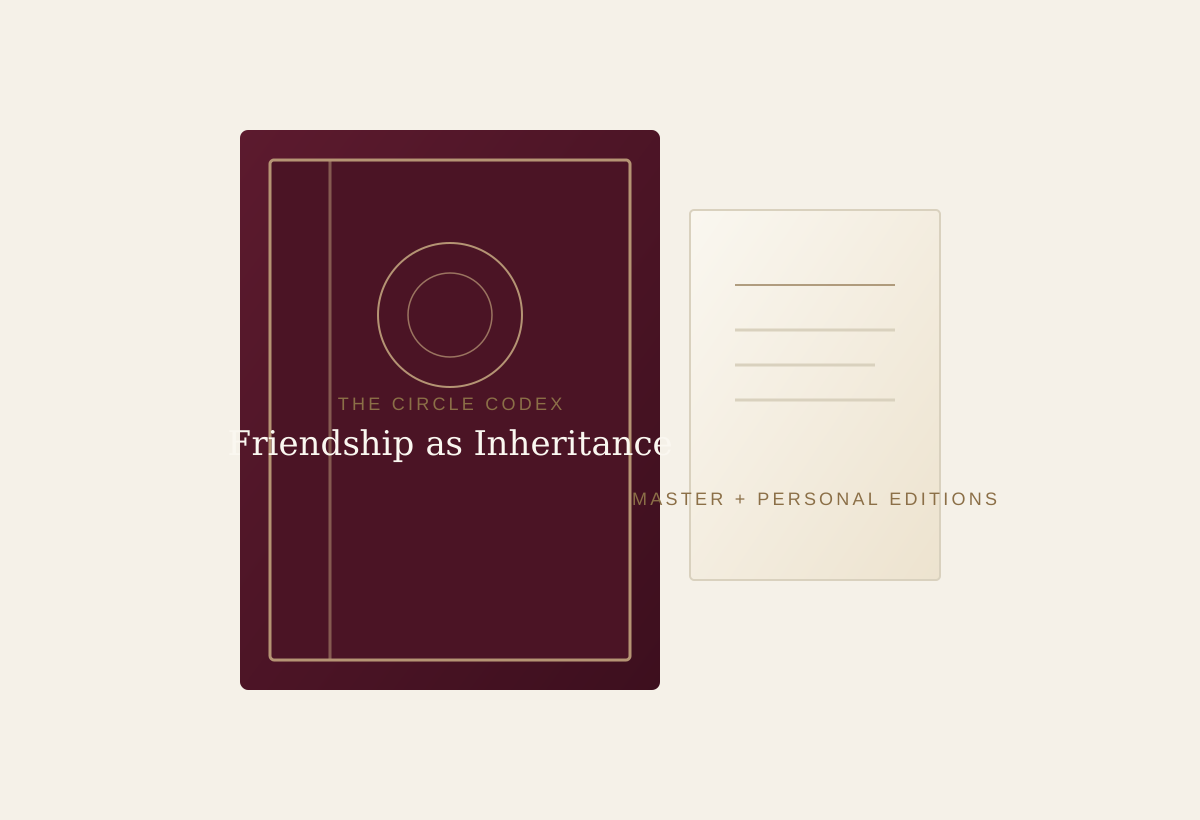
The friendship’s record of recognition — shared, sealed, and designed to outlast the day.
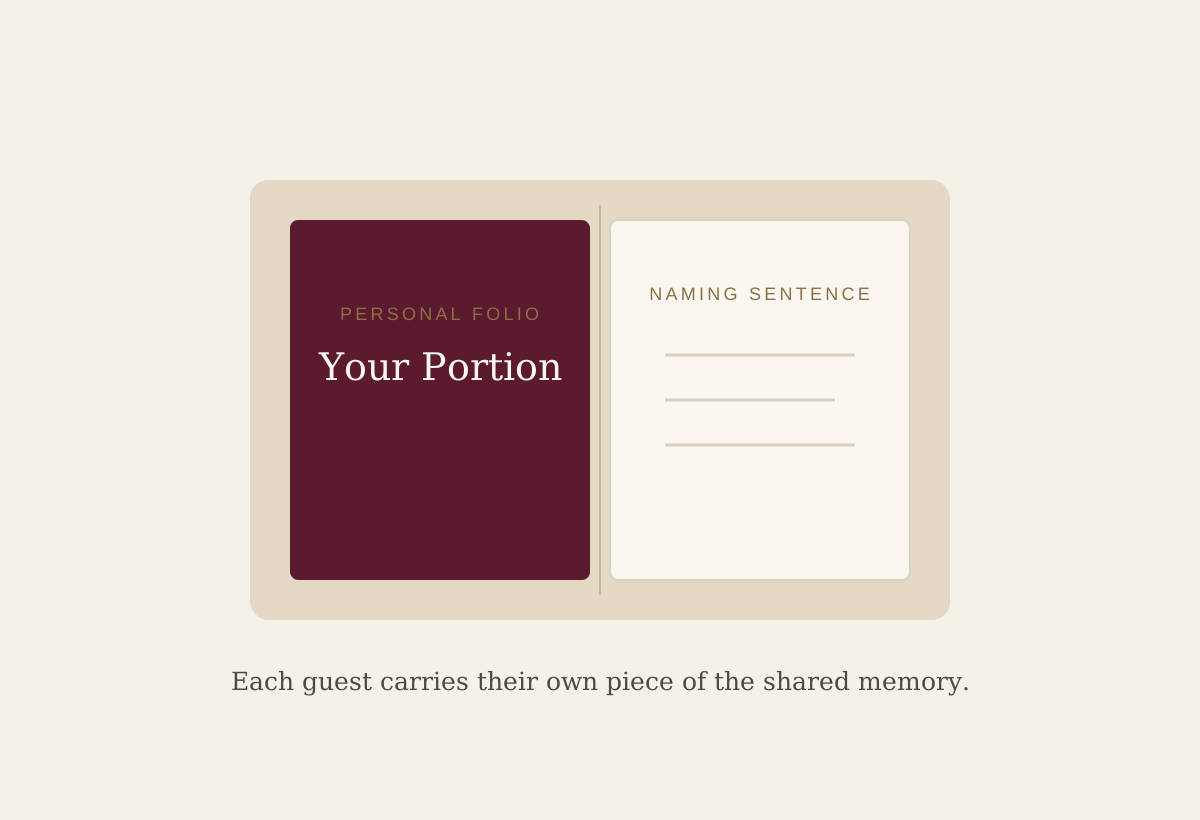
Each person leaves with their portion of the memory, so the inheritance is distributed.
The Long Table ends with more than a memory of wine country. It leaves the friendship with language, roles, care agreements, blessings, and an annual rhythm of return.
A warm personal reflection each friend can test with the people who know them.
The shared story of what the friendship has carried and what it may now require.
Who to call on, who to protect, and how to care for the circle when strain appears.
Keeper, Bridge, Flame, Harbor, Witness, Jester, Steward, Challenger, Blesser, Pathfinder — honored, never imposed.
A practical protocol for drift, silence, misunderstanding, and repair.
One blessing from each friend, sealed for the person receiving it.
A documentary trace of the table: voice, image, place, and atmosphere.
A return practice so the circle does not wait for crisis to remember itself.
The Friendship Mirror is not a report. It is a warm, private reflection that assumes history, memory, teasing, tenderness, long knowledge, and the grace friends give when they finally understand the pattern.
The familiar way your presence changes the room — before anyone has to explain who you are.
The gift your circle may rely on, and the role they may need to stop assuming you will always hold.
Not a flaw to expose, but a pattern friends can understand with more mercy.
The moments when your courage, memory, humor, steadiness, truth, or imagination serves the circle.
The reciprocal question: where the one who carries much must finally be carried.
The report does not end in self-analysis. It sends the person back into relationship.
Friends become interpreters, not subjects.
A line may be blessed, corrected, laughed with, deepened, or released. The report offers the first draft of recognition; the friendship has the final word.
At the close of The Long Table, the friendship leaves with more than memory. It leaves with a practical architecture for grace.
Each participant carries a private reflection shaped for those known over time.
A shared map of what the friendship has carried and what it may now become.
Who brings courage, who repairs, who remembers, who restores lightness, and who needs care.
Keeper, Bridge, Flame, Harbor, Witness, Jester, Steward, Challenger, Blesser, Pathfinder — honored without becoming cages.
A practical covenant for drift, silence, misunderstanding, and repair.
One sentence from each friend: what we know about you, and what we will not forget.
A preserved table moment, held only by consent.
A suggested future return: a letter, dinner, call, bottle, or re-reading.
If this is the room your threshold is asking for, begin with a private inquiry.
Open a Calibration
Read the personal manifesto: The Friendships That Carried Us